
This is a helpful guide, for specific questions and for your convenience please go to our FAQ’s page.
For the purpose of clarity and simplicity we have chosen to avoid, where possible, less well-known or understood medical terms, and substituted them with generally accepted alternatives that are more easily understood by people who may not have the benefit of first aid or more advanced emergency response medical training.
Where medical terms are used we have endeavoured to provide a simple explanation.
Defibrillators – What exactly are they?
A defibrillator is a sophisticated medical device that is used to treat a casualty whose heart has stopped beating (known as a cardiac arrest).
The circulatory system
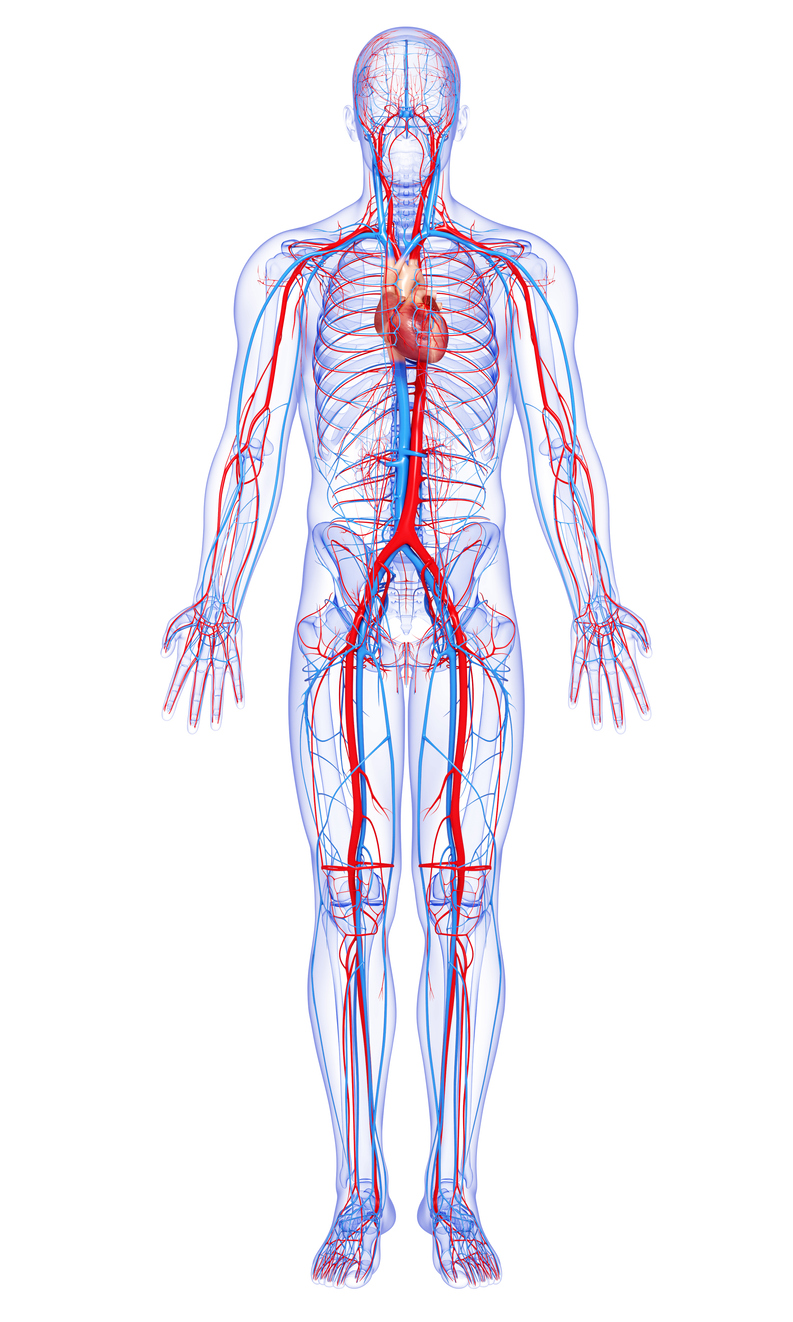
The heart is a vital (essential for moment to moment life) organ and in very simple terms it is essentially a pump that pushes blood around a network of blood vessels (arteries, veins and capillaries) within our body known as the vascular system.
The vascular system is vast and supplies every cell in our body with blood and therefore oxygen.
Oxygen is vital to support the life of every cell in our body. Without a constant supply of blood and therefore oxygen cells will die.
The heart, blood vessels and blood are the three basic elements of our circulatory system, so-called because the blood circulates around the network of blood vessels or vascular systems.
Our blood passes through our lungs as it circulates and picks up oxygen from the air that we breathe in. The blood and the oxygen is then pumped to every part of the body and to every cell for its vitality.
If the heart stops beating and therefore pumping the blood around the vascular system there is a sudden loss of blood pressure and therefore blood is no longer being pushed around the body.
While every cell in the body needs oxygen for its vitality, brain cells are immediately vulnerable to a lack of oxygen, in fact, brain cells could potentially die to a catastrophic degree in just three to four minutes without a constant supply of oxygenated blood.
This could lead very quickly to death or significant brain damage. For this reason, a cardiac arrest scenario can be described as a fast-moving, time-critical and immediately life-threatening medical emergency.
The casualty’s life is in immediate danger until and unless their heart can be restarted in order to provide an essential circulatory function.
So what causes a cardiac arrest?
There are many causes of cardiac arrest – it could be caused by the heart itself getting into difficulty due to disease, the main cause being the heart and circulatory disease that leads to a heart attack * (cardiac arrest is not inevitable with a heart attack, but it does occur with many heart attack casualties, particularly if the event is severe – so a ‘heart attack’ is a medical condition that may or may not lead to cardiac arrest depending on the severity and/or the nature of the event) or an electrical fault that causes problems with the electrical circuitry of the heart or an unknown genetic fault that people may be born with.
As well as complications or a malfunction of the heart itself, the heart function may be compromised by external factors such as systemic disease, asphyxia, electrocution or traumatic injury for example.
If the heart does arrest (stop) there is only one way to re-establish normal heart function, and that is by using a defibrillator.
So quite simply a defibrillator is emergency life-saving equipment!!
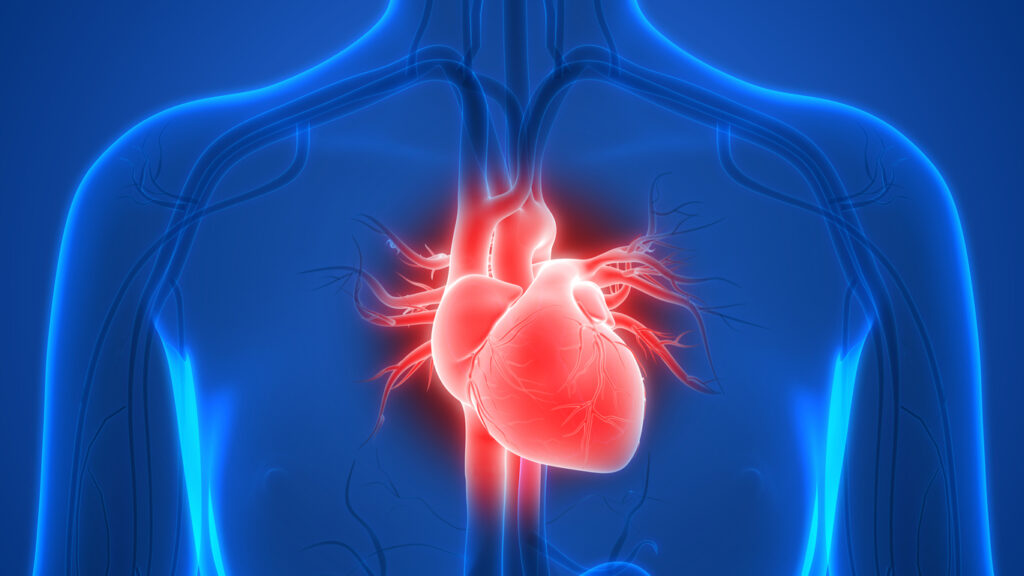
The Heart
AED Type defibrillator explained
Defibrillators found in the workplace or public environments (known as PAD’s – public access defibrillator) are a specific type of defibrillator known as an AED (automatic external defibrillator). At Defib Solutions we specialise in this type of defibrillator equipment, more advanced defibrillators (not AED type) will be designed typically for use by professional medics in hospital environments or by ambulance paramedics.
Defibrillators may be referred to as AED’s (if it is that type of defibrillator), or generically as defib or defib equipment – we particularly prefer to use defib equipment for its simple, descriptive and easily understood properties.
AED type defibrillators are small (no bigger than a shoebox), lightweight (typically less than 3.5kg) portable electrical devices that should be mobilised in the event of a medical emergency where a casualty is found to be unresponsive or unconscious (either term will do – in context, they have the same meaning) or is at risk of becoming unresponsive due to sudden onset of illness, or due to an accident or the casualty is deteriorating very quickly.
The defib equipment must be taken quickly and directly to the casualty without delay!
Under these circumstances, an unresponsive casualty should be assessed for normal breathing and if the casualty is not breathing or not breathing normally the defibrillator should be used.
So, if the casualty is unresponsive and not breathing or not breathing normally the immediately assumed diagnosis is that the casualty’s heart may have stopped, it is not functioning normally (suspect cardiac arrest).

‘AED’ Type Defibrillator
This is an immediately life-threatening situation and the prescribed emergency response is to activate the ambulance service by calling 999 or 112 (112 is the European Emergency Number), start a resuscitation (specifically CPR which is explained later) process and mobilise defib equipment if available nearby.
If a casualty is unresponsive and is not breathing or not breathing normally, they are either in cardiac arrest or will be very soon.
In the case of a cardiac primary event (where the heart mal-functions first), the casualty will instantly drop into deep unconsciousness, they will collapse to the floor and they will stop breathing or will not be breathing normally – these three indicators will be instant and simultaneous. In other scenarios, a casualty may stop breathing first, for example, a casualty of drowning or a severe asthma attack.
In these cases, although a casualty may be collapsed, unresponsive and not breathing or not breathing normally their heart may still be working. However, if the casualty is not breathing or not breathing normally, there is no oxygen getting into the lungs and then into the circulatory system. The heart will not be getting a supply of oxygen and therefore it will get into difficulty and it will be at an increased risk of arresting (stopping) as time goes by without breathing function. Either way, the emergency response will be the same as previously described.
It is absolutely imperative that local EMS is called immediately, on-site or nearby defib equipment mobilised and brought to the rescue scene. The defibrillator must be turned on, immediately attached to the casualty (via two sticky electrode pads) and used appropriately or used in accordance with the voice prompts (all AED type defibrillators provide audible instructions via a voice prompt system).

What does an AED do?
An AED allows a rescuer, when needed to deliver a defibrillation shock (a very specific, controlled, dose and type of electrical energy) to the casualty’s heart in order to try and restart their heart in the event that it had stopped beating (cardiac arrest).
Modern AED’s are robust, and very reliable. They all provide audible voice prompts to instruct the rescuer how to use the equipment in the best possible way to help save a casualty’s life.
Many also have simple visual indicators to assist the rescuer and particularly to assist rescuers who may have impaired hearing or if the equipment is being used in a very noisy environment where machinery for example cannot be quickly shut down or silenced.
About the heart’s electrical system
Every heartbeat is created by a wave of electrical impulses that pass through the heart causing it to contract and then relax in a rhythmic fashion, each one of these contracts and then relax cycles is a heartbeat, and with every heartbeat, blood is pushed or pumped around the vascular system.
If we were to look at these electrical impulses (of a healthy person), that create every heartbeat on a monitor, we would see a very nice, neat and regular series of pulses – situation normal, the heart is functioning as it should do.
This is known as a ‘normal sinus rhythm’.

‘Normal Sinus Rhythm’
When people go into cardiac arrest they generally (but not always) present with abnormal electrical activity in the heart.
Instead of a normal sinus rhythm, we would see something different on a monitor, anything other than normal sinus rhythm can be described as an electrical arrhythmia of the heart or simply ‘heart arrhythmia’.
An arrhythmia is an abnormality of the heart’s electrical activity. It may cause the heart to beat too slowly, too quickly, or irregularly. The heart will not be operating normally and circulatory function will be impaired. These abnormalities range from a minor inconvenience or discomfort to a potentially fatal problem.
The most common life-threatening or catastrophic arrhythmia is known as ‘ventricular fibrillation’ often simply referred to as ‘VF’ or ‘VF arrest’ to describe a casualty’s status.
In the case of VF the electrical impulses in the heart have become confused or scrambled and instead of the normal electrical impulses we see in normal sinus rhythm, on a monitor we would see irregular, erratic and chaotic electrical activity.
Instead of the heart contracting and relaxing rhythmically and pumping blood around the body in the normal way, the heart is now literally quivering like a jelly! Importantly the blood is not being pumped around the body.
When this happens, death will occur within minutes, if left untreated. This catastrophic electrical arrhythmia is the cause of cardiac arrest and the three indicators discussed previously – the casualty will drop into deep unconsciousness, collapse to the floor and stop breathing normally.
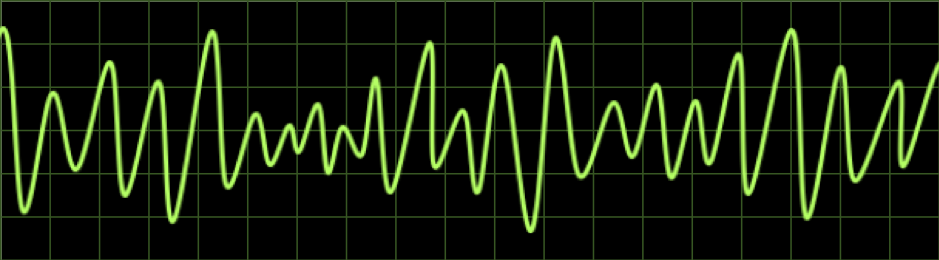
‘Ventricular Fibrillation’ (VF)
Less common than ventricular fibrillation, but also catastrophic is ventricular tachycardia, known as ‘VT’. VT is an inappropriate electrical output, and on a monitor, we would see a continuous series of electrical pulses.
VT may not be immediately catastrophic if the rate (frequency) is not too fast. However, if the rate is very fast, the heart’s ability to push blood around the vascular system is severely compromised, blood pressure will drop and a casualty will lose consciousness. This is now immediately catastrophic and the cause of cardiac arrest.
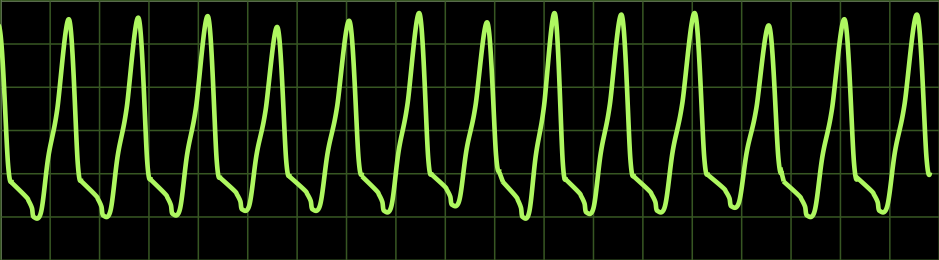
‘Ventricular Tachycardia’ (VT)
In some cases a casualty may present with no electrical activity at all, the heart is completely inactive or stood still, and on a monitor all that would be seen is a flat line, the medical term for this is asystole (ay-sis-sto-lee).
A casualty who is asystolic will be in immediate life-threatening cardiac arrest. An asystolic event may occur for various reasons, possibly due to massive trauma or a casualty that suffers a VF or VT arrest that lies undiscovered for some time. The VF or VT (fast rate) electrical activity will diminish over several minutes into a flat line output on a monitor.

‘Asystole’
So the heart may present with various electrical outputs, we have looked at normal sinus rhythm, ventricular fibrillation, ventricular tachycardia and asystole. There are many other arrhythmias, this is a vast and complex area best left for highly educated and suitably trained medical professionals.
However, knowing a little about the electrical activity of the heart is helpful in terms of understanding how a defibrillator works, but the good news is ‘would be’ rescuers don’t have to know it to use AED type defibrillators!
Our sophisticated AED type defib equipment is going to do all the hard work for them.
How will the AED respond?
Once a rescuer has attached two sticky electrode pads (integral part of your defib equipment) to the casualty’s body, the defibrillator will analyse the electrical activity of the casualty’s heart.
Should it detect normal sinus rhythm the AED will not advise a shock since the heart is working normally, in fact the AED will be disarmed if you will and rendered incapable of delivering a shock to the casualty.
The AED will advise that CPR is resumed if necessary (casualty not breathing or not breathing normally)
Should the AED detect catastrophic (immediately life threatening) electrical activity or arrhythmia (VF or fast rate VT) it will instruct the rescuer to press the shock button in order to deliver a defibrillation shock to the casualties heart.
Many machines are fully automatic (versus semi-automatic) and will provide the rescuer and bystanders with an audible warning to stand clear!
Then a shock will be delivered without operator interaction. When the defibrillation shock is delivered the casualty’s limbs will ‘twitch’ momentarily and quite visibly as the shock causes the muscles to contract.
Important – to avoid possible injury, it is very important that no one is in physical contact with the casualty when the shock is delivered.
If the defibrillator detects no electrical activity at all (asystolic) then the defibrillator will not advise a shock, and will be incapable of delivering a shock to the casualty’s heart.
We need electrical activity for the heart to work – in the case of VF or VT we have electrical activity, but it is the wrong type of electrical activity if you will.
So you can see where the terminology comes from, if a casualty is in ventricular fibrillation we need to defibrillate them with a defibrillator.
If asystole is detected, the AED will advise the immediate commencement of CPR. With good quality CPR we may get a return (due to the provision of oxygen to the heart) of VF or VT electrical activity. Should this be the case a defibrillator will then advise a defibrillation shock.
So AED’s are very safe – a casualty will only receive a defibrillation shock if they are in life threatening cardiac arrest.
So for the purpose of clarity, if the defibrillator detects that the casualty’s heart is working normally (detecting normal sinus rhythm) or a shock will not be prudent (detecting asystolic output) the defibrillator will rendered incapable of delivering a shock to the casualty’s heart (you could press the ‘shock’ button, but a shock will not be delivered to the casualty’s heart). Only if immediately life threatening VF or fast rate VT electrical activity is detected will the AED be capable of delivering a shock to a casualty’s heart.
This means that defibrillators found in public areas and places of business and industry are perfectly safe to use and can be used by anyone even without any formal training. No casualty is going to get a defibrillation shock to their heart unless they absolutely need on to help save their life!
We are keen to make this very clear – without any intervention a casualty that is unresponsive and not breathing or not breathing normally will die, so any rescue attempt has the possibility of improving the outcome for a casualty from a rescuer whether they have received formal training or not.
We do however strongly advise that where equipment is provided, likely rescuers attend a course of competency training and regular refresh training.
A vital part of a rescue where a casualty is unresponsive and not breathing or not breathing normally is CPR (cardio, pulmonary, resuscitation).
Therefore it is normal for AED competency courses to include thorough CPR skills training in addition to the competent and safe use of defibrillator equipment.
What does a defibrillator shock actually do?
When a defibrillator is used to treat a casualty, the defibrillation shock aims to make the electrical cells in the heart to re-charge at the same time.
The shock instantly stops all electrical activity for just a few moments (1 – 3 seconds).
It is then hoped that the heart will respond normally to its own on board ‘pacemaker’ (called the sinoatrial node) which will continue to send out electrical impulses. Each impulse initiating a wave of electrical energy that passes through electrically conductive heart tissue causing the heart to contract and then relax in a cyclic fashion – normal sinus rhythm.
As mentioned previously the casualties limbs will twitch momentarily and quite visibly when the defibrillation shock is delivered. Although this looks quite brutal the defibrillation shock is very controlled and dosed appropriately so that no undue harm is caused to the casualty.
Some survivors of cardiac arrest events have received multiple (20 – 25) shocks and have gone on to make a full recovery from their ordeal. We have learnt already that without defibrillation a casualty in cardiac arrest will die very quickly, so no one should ever be deterred from using an AED. A rescuer can only improve the possible outcome for their cardiac arrest casualty.
A defibrillator shock is delivered to a casualty – what happens next?
Once CPR has commenced a rescuer will need to be looking for signs of recovery. Signs of recovery will be an indication of vitality or life – purposeful movement (be aware that in some cases of cardiac arrest a casualty may display seizure activity – shaking of the arms and/or legs, or limbs may become contorted as the brain stops receiving oxygen), a casualty that swallows, eyelids open and close, a return of healthy colouration (a casualty of cardiac arrest is likely to be very pale and may have blue tinges to the face and particularly the lips) or the casualty begins to breathe normally.
All of these are indicators of life and that the heart is working, however, CPR must continue until the casualty is clearly breathing and showing early signs of a recovery.
This will be the case whether defib equipment is used or not.
If a defibrillator is used and a shock delivered, CPR should be resumed immediately unless there is an instant and obvious recovery – the casualty is obviously breathing and breathing well.
Once a shock is delivered by the defibrillator, in the absence of instant recovery, CPR will now continue for two minutes. All AED defibrillators will instruct the rescuer to provide two minutes of CPR, then it will instruct the rescuer to stop the CPR, it will then analyse the electrical activity of the heart and instruct the rescuer in accordance with its findings.
At any time during resuscitation, the CPR should stop with the return of good quality, normal breathing.
A casualty that recovers should then be monitored very closely until professional medics arrive on the scene to take over. It is not unusual for a casualty to arrest again and again until the cause of the arrest has been treated (usually by advanced medics), so be prepared to recommence CPR and use of a defibrillator. For this reason, it is important that the sticky electrode pads are not removed from the casualty’s body, paramedics will do this or instruct you to remove them on casualty hand over.
CPR explained
Three letters that many people will associate with pressing on a casualty’s chest and breathing into them (sometimes referred to as ‘the kiss of life’). Those letters standing for Cardio (all things to do with the heart), Pulmonary (all things to do with lungs), Resuscitation (a process that endeavors to revitalise, or give life back to someone without life).
In many cases it will take several minutes to get defib equipment to the scene of a medical emergency – a rescuer could be waiting for between five and ten minutes before defib equipment arrives on the scene or even longer if they have to wait for ambulance paramedics to arrive with their defib equipment – ten to twenty minutes might be more realistic or even longer in areas that are geographically remote from emergency services.
So we have a period of time between when a casualty collapses and stops breathing to defib equipment arriving at the scene. During this time there will be no oxygen being brought into the casualties lungs and no circulatory function is provided by the heart pushing oxygenated blood around the casualties body.
The casualty will be deteriorating rapidly, losing vital oxygen, the brain will very quickly (within 3 to 4 minutes) become vulnerable to a lack of oxygen, and death will be the inevitable outcome without any immediate intervention from a nearby rescuer.
The immediate commencement of CPR is the prescribed emergency response, this will vastly improve the casualty’s outcome assuming a casualty has not been in arrest for a long period of time before being discovered and assessed.
It is very important that a rescuer activates local EMS or ensures that someone else has done so before starting CPR**.
The process of CPR involves pressing on the casualties chest – when this is done, the heart muscle is squeezed between the sternum (breast bone) and the spine (backbones). The heart has a series of one-way valves within it. When the heart is squeezed in this way, blood is drawn into on one side and pushed out of the other side if you will, thus providing circulatory function.
It is a very crude way of providing circulatory function, but what we do know is that it works!

When a rescuer breathes into a casualty they provide oxygen. So CPR provides vital oxygen and circulatory function until we can get the casualty’s heart restarted with a defibrillator.
Therefore CPR is a vital part of a resuscitation process, but providing CPR without ensuring defib equipment is on the way (either local, privately owned equipment or by responding ambulance paramedics) is of no value, this is why in a rescue situation it is essential that the local emergency services are activated straight away and, if available, local defib equipment is mobilised to the scene also. It is also of little value to have privately owned defib equipment on-site if there are no trained rescuers to provide CPR.
In respect of CPR, there is a very simple equation, the better the quality of the CPR the better the possible outcomes for the casualty. For this reason all of our defib and first aid courses include comprehensive CPR training using the very latest digital feedback technology to improve skill levels.
So for the purpose of absolute clarity, CPR alone will not restart a casualty’s heart should they have been in cardiac arrest. The CPR element is a vital part of a resuscitation process that will help to keep a casualty viable for further treatment with a defibrillator.
With CPR a casualty is protected to a degree from a lack of oxygen and circulatory function until we can get defib equipment on the scene and ready for use. CPR buys time to allow for defibrillator treatment.
The only way to re-establish normal cardiac output is by using a defibrillator.
If a casualty recovers without the use of defib equipment it is likely that they were not in cardiac arrest, but were in respiratory arrest (cessation of breathing) which if left untreated will quickly lead to a cardiac arrest.
Either way, the prescribed emergency response is appropriate.
If a rescuer does get recovery without the use of a defibrillator because the heart is functioning normally, that would be advantageous and a successful resuscitation, they must still ensure defib equipment and local EMS are mobilised to the scene. The casualty could still deteriorate and anyone who has been successfully resuscitated is likely to be very poorly and will almost certainly need the attention of attending paramedics before being taken to hospital for further medical assessment and treatment.
The process described to orchestrate a cardiac arrest rescue is simplified by what is known as the ‘chain of survival.’

Does our organisation need one and is there a legal requirement to have one?
There is no legal requirement for any business or institution to provide defib equipment in the UK at this time. However, there is a legal requirement under The Health and Safety (First-Aid) Regulations 1981, to provide adequate and appropriate equipment.
Based on a first aid needs assessment you may choose to provide defib equipment and trained operators for your organisation.
We generally find organisations with more than 200 employees/customers have defib equipment onsite or are looking to rent or purchase equipment. Large office blocks or manufacturing plants may have two, three or several thousand people on-site and therefore will have several defibrillators strategically located, and many trained operators.
That does not mean that you can’t buy equipment to protect a small team of maybe 20 people in a low-risk office environment – of course, you can, and some organisations do. High-risk environments, places of sporting activity and remote locations tend to be very good at ensuring equipment and trained operators are made available.
How defib solutions can help you?
We offer a complete solution for all your defibrillator requirements.
We can help you understand your obligations in respect of providing defibrillator equipment based on a first aid needs assessment and help you with that assessment.
We will advise you on what type of defibrillator will be most suitable for your operating environment and what additional equipment may also be prudent.
We can provide full competency training at your business premises for your people.
We appreciate that while larger organisations may find the cost of equipment and training easily affordable, smaller organisations may find the costs prohibitive. For this reason, we are keen to offer our equipment and training at competitive prices and to ensure that you have the right equipment in the right place to offer an appropriate solution.
Naturally, we offer ongoing support for equipment (whether supplied by us or not), training and consumables.
If you are not sure or have any questions about defibrillators in workplace environments, you have found the right place for expert, professional advice. We can help you understand whether you need one, the legal requirements, concerns over any liabilities, the most appropriate equipment for your operating environment, training and maintenance.
While this list already might seem daunting, actually you will be surprised at how simple we make it at defib solutions.
Not only will we make it very simple to understand, but you will also be amazed at how inexpensive equipment and training is and what a difference having on-site defib equipment has on workforce morale knowing that everyone has this considerable level of protection should an emergency cardiac arrest event occur.
* Many people believe that a heart attack and cardiac arrest are the same. This is not the case, for the purpose of clarity, a heart attack is a medical condition where the heart is in distress due to a blocked artery in the heart.
A cardiac arrest is where the heart actually stops purposely pumping blood around the body. A heart attack is a very serious medical condition that may or may not lead to a cardiac arrest depending on the severity of the event.
In many cases, but not always a heart attack will develop with worsening symptoms over time and cause the heart to arrest (stop – cardiac arrest).
A heart attack can be immediately catastrophic and cause immediate cardiac arrest. Heart attack presents in many ways, symptoms can range from very mild to severe with a more significant event. Symptoms can become progressively worse over minutes or days. Very minor heart attack events can resolve themselves and symptoms fade away (if you believe you may have had a heart attack you must seek medical advice straight away). There are many signs and symptoms. Anyone or any combination of the symptoms listed below could indicate Heart Attack.
- Central chest pain, often described as vice-like, squashing, gripping, dull, tightness or pressure.
- The pain can radiate into either or both arms (more commonly the left), the neck, jaw, back or shoulders.
- A heart attack can be enduring lasting several hours or even days.
- A casualty may be pale or have a grey colour sometimes described as ‘ashen’ and a casualty may sweat profusely.
- Pulse may be variable and often becomes irregular, missing beats.
- Shortness of breath, dizziness, nausea, vomiting.
- High levels of anxiety, casualties will experience a sense of impending doom with a severe heart attack event.
If you have any reason to believe that either you or anyone else is experiencing any of the symptoms listed above with no obvious alternative explanation (written with absolute caution, if there is any doubt at all you must default to ‘suspect heart attack’). Please call 999 / 112 and ask for the ambulance service straight away.
A heart attack is a life-threatening medical emergency.
Speed of treatment will have a huge influence on the possible outcomes for the casualty.
** In the event that the casualty is a baby (from birth up to one year of age) or a child (between one year and puberty (ten – mid to late teens)) the appropriate response is to deliver one minute of CPR treatment before activating the local EMS. This will only apply for rescuers who are on their own with a casualty. Naturally, if a rescuer had another person with them, they should call 999 / 112 while the CPR gets underway.
Contact Defib Solutions
‘Defib Solutions’ is a trading brand of Requisite Safety Group Ltd.
Registered office : 517- 519 King Street, Stoke-on-Trent, Staffordshire ST3 1HE
Company Registration No.: 10072712
VAT Registration No.: 239062704